Showing posts with label processed. Show all posts

July 20, 2014

Interview with an Olive Oil Expert (2): Sensory Aspect

Everything you need to know about Olive Oil
(Part 2)


We continue in this post, part 2 of the Interview series with the Olive Oil Expert.
This time it covers the topic of the sensory evaluation of Olive Oil.


Sensory Aspect of Olive Oil


Olive Oil tasting should be done in tapered (Dark Blue) glasses.
WHAT COLOR IS GOOD OLIVE OIL?
The color of olive oil is not an indication of quality. Choose olive oil for taste not for its color.

Interview with an Olive Oil Expert (1): Health Aspect

Everything you need to know about Olive Oil
(Part 1)


“And a tree (olive) that springs forth from Mount Sinai, that grows (produces) oil, and (it is) relish for the eaters.( Quran 23:20 )”

Today’s contribution comes straight from the Olive Oil industry!
Pearl’s interviewed an avid experienced Food scientist who has been working in the olive oil production for 6 years. It is important for consumers like us know briefly about olive oil production, the sensory characteristic of the best olive oil, and how can we detect the differences or how can they choose the best olive oil brand from the market. We will be covering a week of posts about Olive oil, so stay tuned!

Mr. Mohammad Kobayter is the Quality Assurance and Logistics Manager at KOBAYTER S.A. in Malaga -Spain. Kobayter holds a Bachelor of Science in Food Science and Management from the American University of Beirut (AUB) and he is a certified expert in virgin olive oil tasting (from the University of Jaen, Spain). He previously worked as a Production manager assistant at KOBAYTER FRERES S.A.L. in Lebanon. (Alwazir historic Ad ) 

Mohamad, undergoing a sensory test on the olive oil

September 30, 2013

Should we Give Processed Food Another Chance?

This is one of the posts I wrote last year and I forgot to press the " Submit" button :(
The content is still valid and  irrelevant of time though.

“Don't eat anything your great-grandmother wouldn't recognize as food.” Michael Pollan.

Don't eat anything your great-great grandmother wouldn't recognize as food." Michael Pollan

As extreme as this notion might be, it does hold some truth. The debate about processed and wholesome (natural) food has always been raised. Some scientists claim that processed food offers convenience, saves time money, transportation costs and makes food available all year around over all the globe. While others argue that processed food has been the major cause of diseases due to their low nutrient content, high artificial ingredients, and high caloric value. World health organization states that the increase in obesity levels and chronic diseases (diabetes, heart diseases) are attributed to processed foods. Increased risk of cancer is also due to the amount of chemicals in these types of food. Also hyperactivity and attention deficiency disorder in kids were caused by consuming food loaded with artificial colorants and flavors such as candies and soda drinks.

December 11, 2012

Homemade Muffins

Muffins  started out as a type of small cake, as an alternative to cornbread. Early muffin recipes tend to result in less sweet muffins with far fewer ingredients than their contemporaries. Muffins then became widely regarded as a breakfast food because they were easy to prepare and cooked in a short amount of time.

 
My own Home Made Chocolate orange flavored Muffins Fresh from the oven ! Check Recipe Below

May 22, 2012

The Sweet Paradox: Natural or Artificial Sweetners?


Sugar in Drinks!

A girl in a restaurant orders a burger with fries, and then orders a diet coke. “Do the calories really matter when you are eating all this food?” her friends around her claim. Yes it does. One can of regular coke contain, more or less, 38 grams of sugar.
 Scientists have all agreed about the malicious effect of consuming lots of sugar. Unfortunately, sugar is embeded in almost all of all food . Sugar plays a major role in the production of thousands of food products from cured meats through preserves and frozen fruits to confections.

May 16, 2012

Reading list for this week!

I will be collecting interesting and important articles about food science and nutrition.Though  I usually share them on my facebook page but it gets overwhelming for my fans who are on facebook for fun.
So, if you are seeking abit of education, you may check my blog frequently ( I will be launching the Reading list section soon  )

  • PRESERVED FOOD

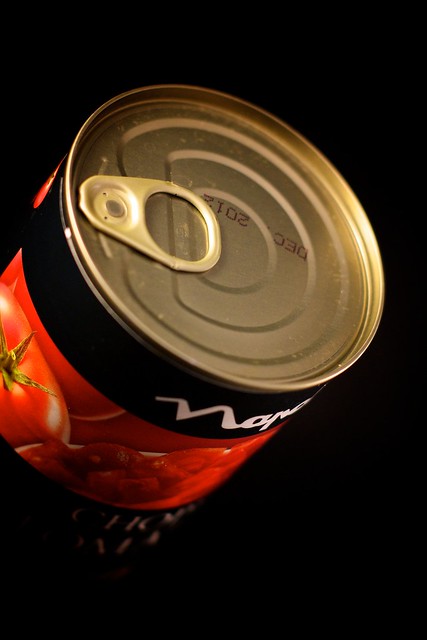
Ever wondered why canned food tasted bad? And why it would never be like fresh food? What do you know about Autoclaves and retort machines in food preservation? Here is an article that simply explains why preserved foods' flavors are not that delicious>
11/366 - Canned Food

  • Better Nutrition

In Copenhagen Consensus 2012, researchers and Nobel laureates were looking at the smartest solutions to the world’s biggest challenges. A research paper released on hunger and undernutrition by researchers from the International Food Policy Research Institute, proposed that decision-makers prioritize micronutrient interventions. A better nutrition would help the world's biggest problems: Hunger and malnutrition. Read more here How Better Nutrition for Children Helps Solve Two of the World’s Biggest Problems
Picture from Slate.com
  • The Organic Dispute

    Why do people still dispute about organic and the "not-organic" farming? What is the major difference  between both? And why do media have discrepancies when it comes to this subject?Here is an interesting read by  the Atlantic about the War between the organic and conventional farming
Coneygreave Farm and Alport Height, Derbyshire

  • Coco Cola Ethics

    After the PR crisis of Coco Cola that unethically treated migrant workers for picking up the oranges in southern Italy, some have demanded that their sponsorship for the London Olympics should be halted.  Read more about this argument from the Ecologist :Should Coca Cola be allowed to sponsor the London Olympics ???
Fanta


All pictures were attributed to their owners and were searched for from creativecommons.org

April 18, 2012

The Paleo diet: Would you eat like your ancestors?

Have you ever wondered what our ancestors used to eat? How male bodies were fit and masculine and females were of medium weight yet healthy?
They never counted the calories, and they ate whatever they liked without any dietician dictating those annoying “No carb”, “No fat”, sometimes “No eating” diets! The notion of " nutrition" , "diet", " nutrients"  just emerged in the last century.
So how would the next human be like?

April 7, 2012

Food Against Breast Cancer

Who gets breast cancer?
I had the utmost pleasure in supporting through media the campaign " AUB is going pink" last month.The campaign which was organized by AUB's Red Cross club ( Sponsored by Beesline and Le Gustav), intended to raise awareness among college students about Breast Cancer.

February 10, 2012

Kashkaval Cheese Production in AREC


"Cheese - milk's leap toward immortality" Clifton Paul Fadiman

I have been always fascinated by cheese. Its hundred varieties, hundred of flavors and odors...Its texture , the way it melts , the way it squeezes between our teeth. 
And I always thought what had occurred to our ancestor's mind to get the rennet from the stomach of the calves and put in milk to do cheese. It was a Magical moment.

And truly as one said “I just don't see the point of not eating cheese. I mean, if God didn't want us to eat cheese, would he have let man invent it?” 

Even Charles de Gaulle , president of France after World War 2:" "How can you govern a country which has 246 varieties of cheese?”  

Cheeses might be a mystery indeed. But not if one understands them.
Actually , cheeses with their different varieties are due to different processing methods. This post will be about Kashkaval ( Bulgarian) , which is commonly known in Lebanon as "Kashkawen".
Kashkaval is from the "Pasta Filata " style Cheeses . That is it is  basically like Mozarella, Cheddar cheese, ...etc
First, It was the Romans wanted a kind of cheese that can stretch , and the way they did it was through adding hot water to the cheese curd.
Mr. Samson Atamian* organized the workshop in cooperation with Farmer to Farmer (ftf) NGO and the Nutrition and Food sciences department of  Faculty of Agriculture and Food Sciences and hosted by AREC .  FtF had already invited Mr. Johnathan Metzig** for training other dairy companies . Mr. Atamian was given the chance to invite and host him for one day at the American University of Beirut. 


 The purpose of the workshop was broadening the knowledge of  the food technology graduate students in the field of  cheese making. Thus, to improve their skills and knowledge, inorder to be able to improve the local food industry .

February 7, 2012

Processed Vs Natural Foods as seen in our Stomach

Processed food definitely differs to natural food , whether in their caloric value, preservative content, nutritional benefits and other health differences.
This is constantly proved by  bright food  scientists, nutritionists, medical doctors  researching on this subject. But what how can a filmmaker prove these differences? And  To  what extend does this food differ when we swallow, till we digest , up till we absorb the distinct ingredients in it?

This is what Stefani Bardin  is  trying to find out through a project called: "M2A™: The Fantastic Voyage"
Stefani Bardin*  is currently producing a body of work that explores the influences of corporate culture and industrial food production on our food system. These investigations take the form of single and multi-channel videos, immersive and interactive installations and video games.

Here is about M2A™:

November 16, 2011

The Red Velvet Cake Dilemma

The Red velvet cake has lately been prominent. Everytime I am around my friends , the Red velvet cake should be either mentioned or devoured in their mouths.One can’t deny that its feathery texture, the striking red color, and the overwhelming vanilla taste, that contribute to its fame. It is indeed a magical cake, and just looking at it reminds me of cartoon, and all the Disney movies we all grew up watching.
Picture from the web
However, beauty is not pure. And as everything in life have their pros and cons. The red velvet cake is not an exception to this rule, sadly.

Normally nutritionists scare you off from these high caloric cakes, but as I am a food scientist I’d rather take another angle.  So, this post  is not to scare you away from the calories; rather, it’s the “red” you should worry about.

Let’s take Martha Stewart’s online recipe of the cake. Martha uses around 1/4 to 1/2 cup of a red food coloring to make one cake. She clearly states to put 2 one-ounce bottles liquid red food coloring to achieve the desired shade!Consider a normal diet; you are having one piece of the red velvet cake every month, along with other colorants in food from the halloween candies, to the Eid Mlabbas, to the Christmas colored cookies, to potato chips, fruit loop cereals, the guacamole dip, to the hotdog and the  frozen vegetables…etc The list goes one because everyone is increasingly relying on  processed foods.
 The question is whether all these colorants will cause any health implications.

Let us start why is there color in my food? 
Remarkably, sensory scientists found that color is always associated with flavor. Consumers may refuse to have a green chocolate drink or a brown strawberry juice. Therefore, industries rush in adding colorants to make their product look fresh, nutritious, and thus appealing to consumers. That’s because consumers love everything that resembles nature. ( more on how color affects the sense of tastes of food & drinks by Washington University)